

_edited.png)


Day 1
-
Discovering ANCHISE Solutions
(14 January 2026)
The ANCHISE Final Forum opened at the Society of Archaeology in Athens, gathering over a hundred participants from across Europe for three days of exchange on the future of cultural heritage protection. The morning set the tone with welcoming remarks from the European Commission, ICOM Greece, the French Embassy in Greece and a video address by French Higher Education, Research and Space Minister Philippe Baptiste, who described ANCHISE as an example of how well-coordinated research can make a tangible difference against trafficking. Dr Vassiliki Papageorgiou of the Hellenic Ministry of Culture then offered a vivid account of Greece's experience in combating looting, presenting recent repatriation successes and stressing the growing importance of digital tools and international partnerships. The French Minister of Higher Education, Research, and Space Philippe Baptiste sent a video message welcoming the ANCHISE excellence in enhancing the fight against trafficking and looting by combining a sociological and legal approach with cutting-edge technologies.
Project coordinator Prof. Véronique Chankowski presented ANCHISE's three-year journey: a toolkit of six technologies developed through a bottom-up approach with end-users, a body of social sciences research on trafficking networks, and a professional network connecting previously fragmented communities. She emphasised that no tool can replace human expertise, but that innovation designed with practitioners can dramatically accelerate operational responses.
A session on interdisciplinary collaboration then explored how ANCHISE brought museums, law enforcement and researchers to work together. Sophie Delepierre (International Council of Museums) highlighted that ANCHISE's co-development approach was a first for the museum community. Marine Lechenault (French National Police College) stressed that tools enabling answers in minutes rather than days fundamentally change what is possible for investigators. Benjamin Omer (French School at Athens) then stated the importance for HSS researchers to be able to influence the development of tools through their fundamental and practical studies. The afternoon was dedicated to the tools.

The six technology partners (PARCS, ICONEM,Fraunhofer, ICCS, INOV and the Cyprus Institute) presented their solutions and shared how user feedback across three demonstration phases reshaped their development. A recurring theme: the challenge of data. Image recognition tools can only find matches when referencedata exists, underscoring the need for better data sharing and institutional cooperation.The day concluded with a users roundtable moderated by Prof. Olivier Henry (Lyon 2). Christophe Verbois, a French customs officer at Paris airports, described how ANCHISE toolssupport rapid decisions on suspect objects.
Maria Dahlström (ICOM Sweden) called for sustainability and tool integration, Rodolfo Brancato (University of Naples) highlighted the tangible evolution of tools across phases, and Thomas Sagory (Musée d'Archéologie Nationale) stressed that interoperability with existing databases remains the critical missing link. A sharedmessage emerged: data integration, training and institutional commitment matter just as muchas technological sophistication.

ANCHISE Final Forum in Athens & Online | 14 January 2026 - DAY 1 MORNING
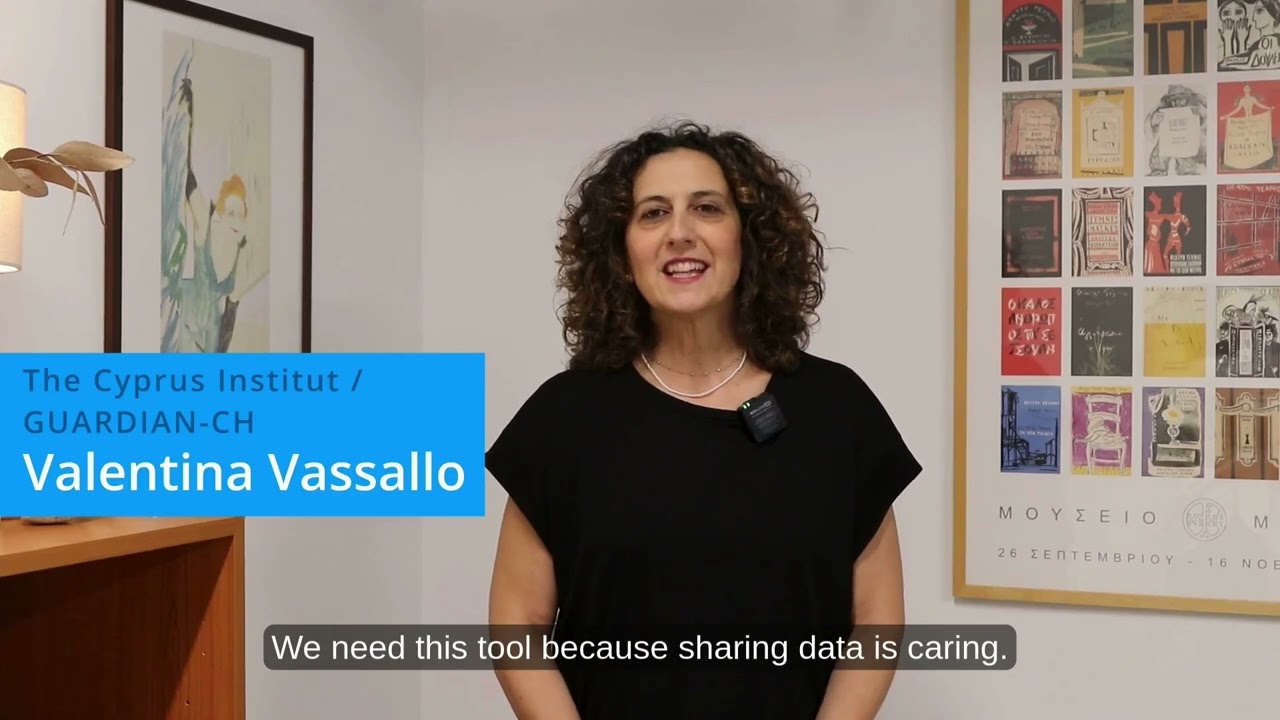
ANCHISE Final Forum in Athens & Online | 14 January 2026 - DAY 1 AFTERNOON
Day 2 - Curating, Acquiring and Processing Cultural Heritage Data (15 January 2026)
The second day shifted focus to data: how it is produced, curated, shared and put to use. Sophie Delepierre (ICOM) opened with a keynote arguing that digitisation of museum collections is a powerful enabler for heritage protection, provided it is carried out ethically, with proper standards and institutional commitment. Museums must remain at the heart of data processes as custodians of cultural heritage information. The morning centrepiece was a session on transdisciplinary research. Prof. Vincent Michel (Poitiers) presented the findings of the symposium publication gathering some thirty international researchers on the political economy of archaeological trafficking. Prof. Chankowski connected this to the comparative study on metal detecting in France and Greece, showing how sociological understanding directly informs the design of monitoring technologies. Axel Kerep (PARCS) described the "symbiotic" co-development between researchers and technologists, while Prof. Olivier Henry (Lyon 2) presented the three-phase evaluation: 616 interviews across nine focus groups, demonstrating that iterative user feedback measurably improved tool performance, with some scores rising above 9 out of 10 by the final round.
A session on replicability followed, with Mariana Vasilache (Lyon 2) and Maxime Girard (Poitiers) showing how tools were tested across deliberately diverse environments: large and small museums, air, maritime and land borders, archaeological sites from the Mediterranean toScandinavia. While tools matured significantly between phases, the key to adoption lies inadaptability to local institutional, legal and linguistic contexts. The afternoon roundtable on data interconnection, moderated by Dr Valentina Vassallo (Cyprus Institute), brought together the French and Greek ministries of culture, the EuropeanCommission, the ECHOES project and the AURORA consortium.

Discussion converged on acentral paradox: standards exist, but adoption remains uneven and fragmentation persists.Marie Véronique Leroi (French Ministry of Culture) observed: "Tools will come and go, but thedata will stay." Maria Claudia Bodino (European Commission) urged the heritage community tomake its voice heard in broader data policy debates, while Feđa Kulenovic (AURORA) called formore training and common ground, starting with students.The day closed with the official announcement of the Poitiers publication and a poster sessionby six young scholars from France, Italy and Greece, a reminder that the next generation ofheritage protectors is already at work.

ANCHISE Final Forum in Athens & Online | 15 January 2026 - DAY 2 MORNING

ANCHISE Final Forum in Athens & Online | 15 January 2026 - DAY 2 AFTERNOON
Day 3 - Policies and Recommendations
(16 January 2026)

The final day turned to the future: what political frameworks, training standards and institutional structures are needed to sustain the fight against illicit trafficking? UNESCO's Sunna Altnoder opened by connecting ANCHISE's work to the broader international agenda, highlighting the growing complexity of online trafficking and the importance of community involvement alongside government action. Marco Fiore (MCA) and Benjamin Omer (EFA) then presented the project's policy recommendations, centred on a flagship proposal: the creation of a European Competence Centre for cultural heritage protection.
Grounded in over a decade of research and operational experience, the proposed centre would consolidate existing expertise through four pillars: a research observatory, technological development and shared standards, community engagement, and capacity building. The speakers stressed that current EU policy momentum offers a strategic window for this initiative.

A cluster session brought together the coordinators of ANCHISE, AURORA and ENIGMA, who converged on a shared diagnosis: no single project or discipline can solve trafficking alone. Sustainable progress requires permanent European coordination bridging innovation and institutional cooperation. The EU policy roundtable, moderated by Corinne Szteinsznaider (MCA), saw frank exchangesbetween representatives of the European Commission, the European External Action Service, Europol and the Cypriot Department of Antiquities. Maria Claudia Bodino signalled that the 2026 EU work programmes contain concrete expectations on trafficking prevention.
Isabelle Meslier (Europol) highlighted the urgent need for shared terminology and interoperable databases. Maria Makri presented Cyprus as a case study of how trafficking affects countries over decades, calling for stronger market regulation including online. Alfio Gullotta (EEAS) reminded participants that trafficking is global and requires cooperation beyond EU borders. The afternoon focused on training.

A roundtable moderated by Hélène Ventimiglia (ICOM) with Claire Barbillon (École du Louvre), Mariusz Wiśniewski (Polish Ministry of Culture), Laurelin Pop (Swiss School of Archaeology) and a representative of Bulgarian law enforcement (GDBOP) confirmed that technology adoption depends on trained professionals. Claire Barbillon presented new curricula on provenance research, while the Bulgarian GDBOP representative described how hands-on experience with ANCHISE tools had increased officers' confidence. A common message: while learning environments based on real scenarios and experimentation are highly effective, interdisciplinary training must become standard, not exceptional.
Pier Giacomo Sola (MCA) summarised ANCHISE community engagement legacy before a final roundtable on awareness-raising. Vincent Michel (Poitiers) underlined the role of museums as spaces for education and public mediation, Nikolas Zirganos shared lessons from major transnational investigations illustrating the dual role of journalism in surfacing evidence and reaching the public, Peter Campbell connected awareness-raising to frontline operationa readiness, and Thomas Leclaire (OCBC) brought the perspective of France's specialised art crime unit. Participants called for rapid, adaptable communication formats and sustained investment in frontline capacity. Prof. Chankowski closed the Forum by reaffirming three priorities: a European Competence Centre, interoperability of cultural heritage data, and continued investment in training and professional networks. She concluded with a shared commitment to ensure that ANCHISE's outcomes contribute to long-term efforts against illicit trafficking, well beyond the project's formal end.

ANCHISE Final Forum in Athens & Online | 16 January 2026 - DAY 3 MORNING